
The Trees Behind the Halloween Silhouette
🎃The Trees Behind the Halloween Silhouette🎃
When you think of Halloween, you probably picture a full moon, a black cat, and that spooky tree silhouette — Did you know that two real trees often inspire that eerie image?
Meet the Weeping Willow and the Kentucky Coffee Tree — two fascinating species that bring both mystery and beauty to our landscapes. Let’s take a closer look at two of the most common trees behind the Halloween silhouette.
The Weeping Willow
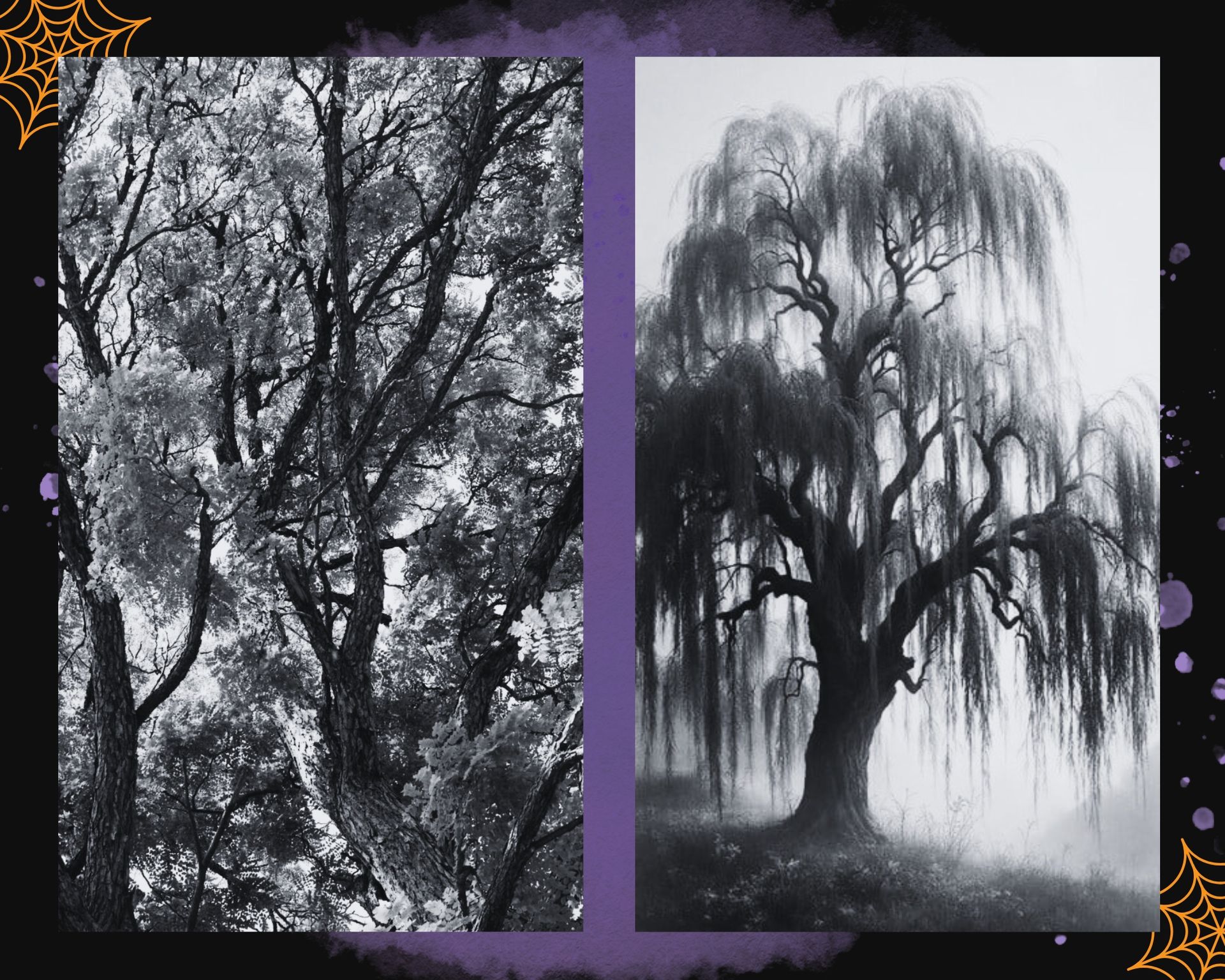
With its long, draping branches that sway like ghostly arms in the wind, the weeping willow is the perfect tree for a haunting scene. But beyond its spooky appearance, it’s actually an incredible species with some unique traits.
1. Remarkable Proportional Growth
Unlike many other trees that grow taller than they are wide, the weeping willow often grows just as wide as it is tall, creating a beautifully balanced canopy. And it grows fast! Imagine a tree that can reach 100 feet tall — and just as wide — in no time.
2. Nature’s Water-Loving Tree
Weeping willows thrive near water. If you’ve ever seen one beside a pond or river, you know how at home they look there. Their roots soak up moisture and even help prevent soil erosion, making them both beautiful and functional.
3. Surprisingly Not Native to the U.S.
Even though we see them everywhere today, weeping willows actually come from China. They were brought to the U.S. in the 1700s and quickly became a beloved landscape tree.
4. Early to Leaf, Late to Leave
One of the first trees to leaf out in spring and one of the last to drop its leaves in fall — the weeping willow stands out all year long.
5. A Butterfly Favorite
This tree isn’t just for looks — it supports wildlife, too! It’s a host plant for viceroy butterfly larvae and provides nectar for adult butterflies, making it a friend to pollinators.

The Kentucky Coffee Tree
The Kentucky Coffee Tree might not look as eerie as the willow, but its rugged bark and bare twisted winter branches give it that classic “haunted tree” vibe. Plus, its story is just as interesting.
1. A Late Bloomer
Unlike the willow, the Kentucky Coffee Tree is one of the last trees to leaf out in spring — often standing bare long after others have turned green.
2. “Two Dwellings”
Its scientific name, Gymnocladus dioicus, includes the word dioicus, meaning “two dwellings.” That’s because male and female flowers grow on separate trees — a rare trait in the tree world!
3. Tough and Durable Wood
Although it’s not commonly used, the wood of this tree is naturally rot-resistant and has occasionally been used for railway ties, fence posts, and even construction projects.
4. Toxic Seeds (Until Roasted)
Here’s a Halloween-worthy fact: the seeds of the Kentucky Coffee Tree are toxic until roasted! They must be roasted at 150°F for several hours to make a coffee-like drink — hence the name.
5. A Tree with History
Even George Washington mentioned the “coffee tree” in his diaries from the late 1700s — making it a tree with some serious American roots.

The Perfect Pair for a Spooky Scene
Next time you see a creepy tree silhouette in a Halloween decoration or movie, you might just recognize its real-life inspiration. The weeping willow’s graceful droop and the Kentucky coffee tree’s bold, bare shape both capture that eerie, timeless Halloween spirit.
Whether haunting a movie set or gracing your backyard, these trees remind us that nature can be just as mysterious — and magical — as any Halloween night.